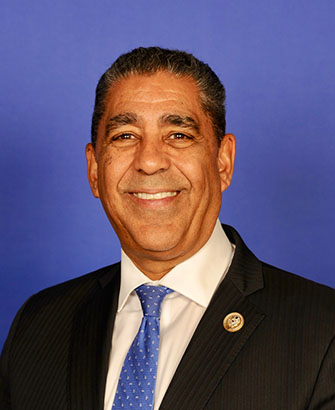
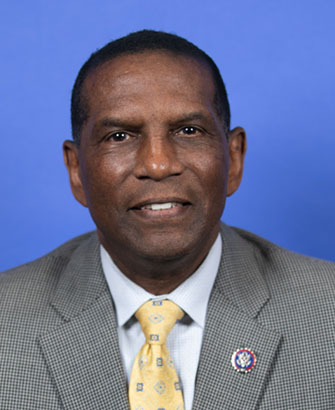
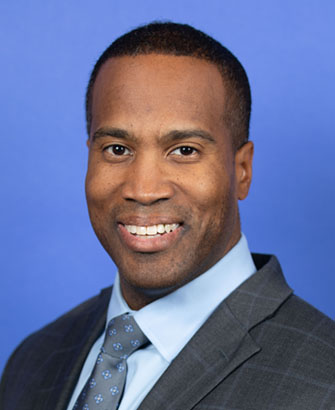
This is a graphic I did which found 64 black African American members of the House. Not the usually quoted figure of 61.
The difference is likely because of things like whether they count Maxwell Frost who is Afro-Cuban (ancestry from Cuban slaves rather than from US slaves historically). Some will be Afro-Latino and others Afro-Carribean. And then Marilyn Strickland is Korean American born in Seoul, South Korea, to a Korean mother and an African American serviceman father. Kamala Harris counted as African American when she was senator though she is half Indian. So there are borderline cases like that.
[Correction, removed David Scott because he has died]
[That makes it 64 but I can’t find anyone else who has died or left office in the list - the list now has them all by name]
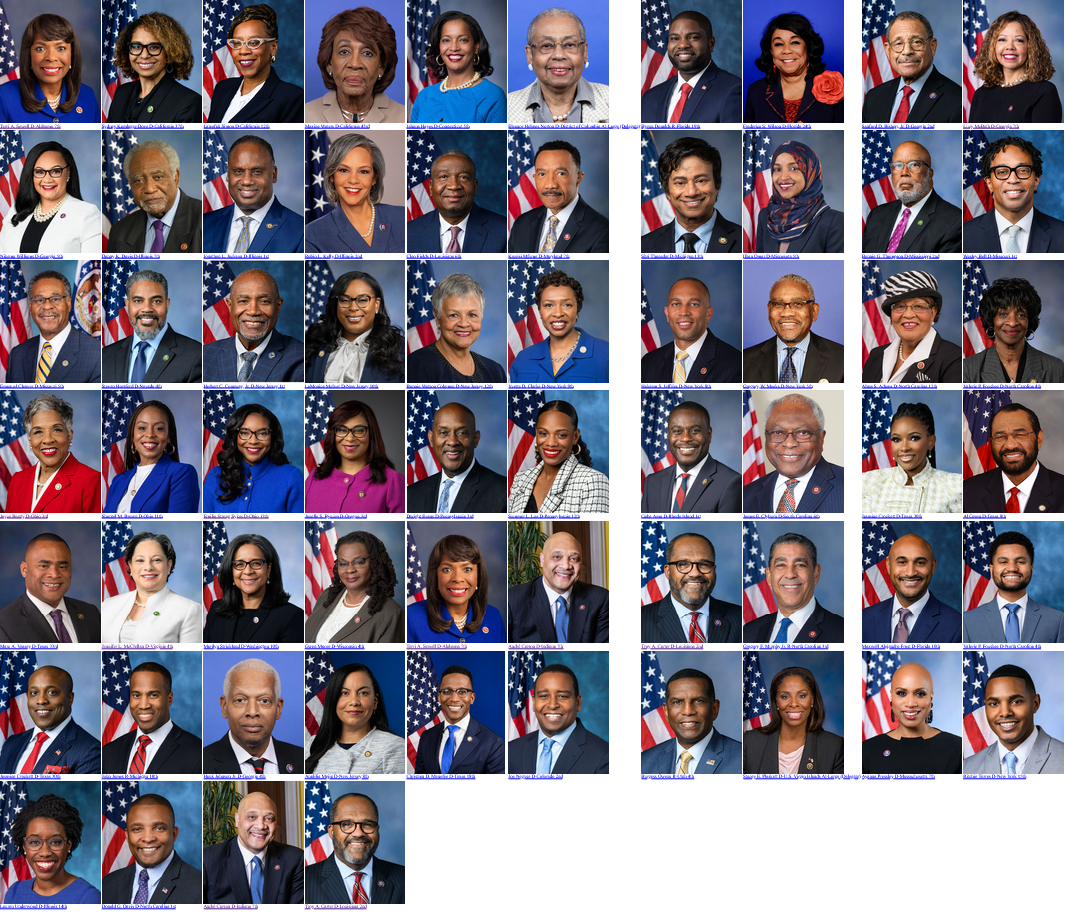
I’ve uploaded it as a web page here:
https://robertinventor.online/booklets/Black_African_members_of_House.htm
The names link to the Clerk of the House pages. Some have [- W] after them. The W links to their Wikipedia pages for the ones with pages to link to that Perplexity AI found.
Alternative layout with 5 to a row
https://robertinventor.online/booklets/Black_African_members_of_House-5torow.htm
I got them from the list at the end here:
https://history.house.gov/Exhibitions-and-Publications/BAIC/Historical-Data/Black-American-Representatives-and-Senators-by-Congress/
It’s verified to the current Clerk list of all current members of the House and you can click on each photo to go through to the official .gov page about each one, and which district they represent.
The urls are all in the same format https://clerk.house.gov/members/Cnnnnn
By visual inspection they are all African Americans.
So though I made this using Perplexity AI I can guarantee that the list is accurate - there are at least 64 current African American members of Congress and the list is likely complete.
This is how I made it:
https://www.perplexity.ai/search/a355cd03-2047-4ce8-8ee9-b259e772552c#19
UPDATE - there are 77 in the Black Caucus with most of those in Congress. Presumably some of these don’t count as African American
https://cbc.house.gov/membership/caucus.htm
Here is a close up of the audience during King Charles’ speech to Congress showing 5 of them.
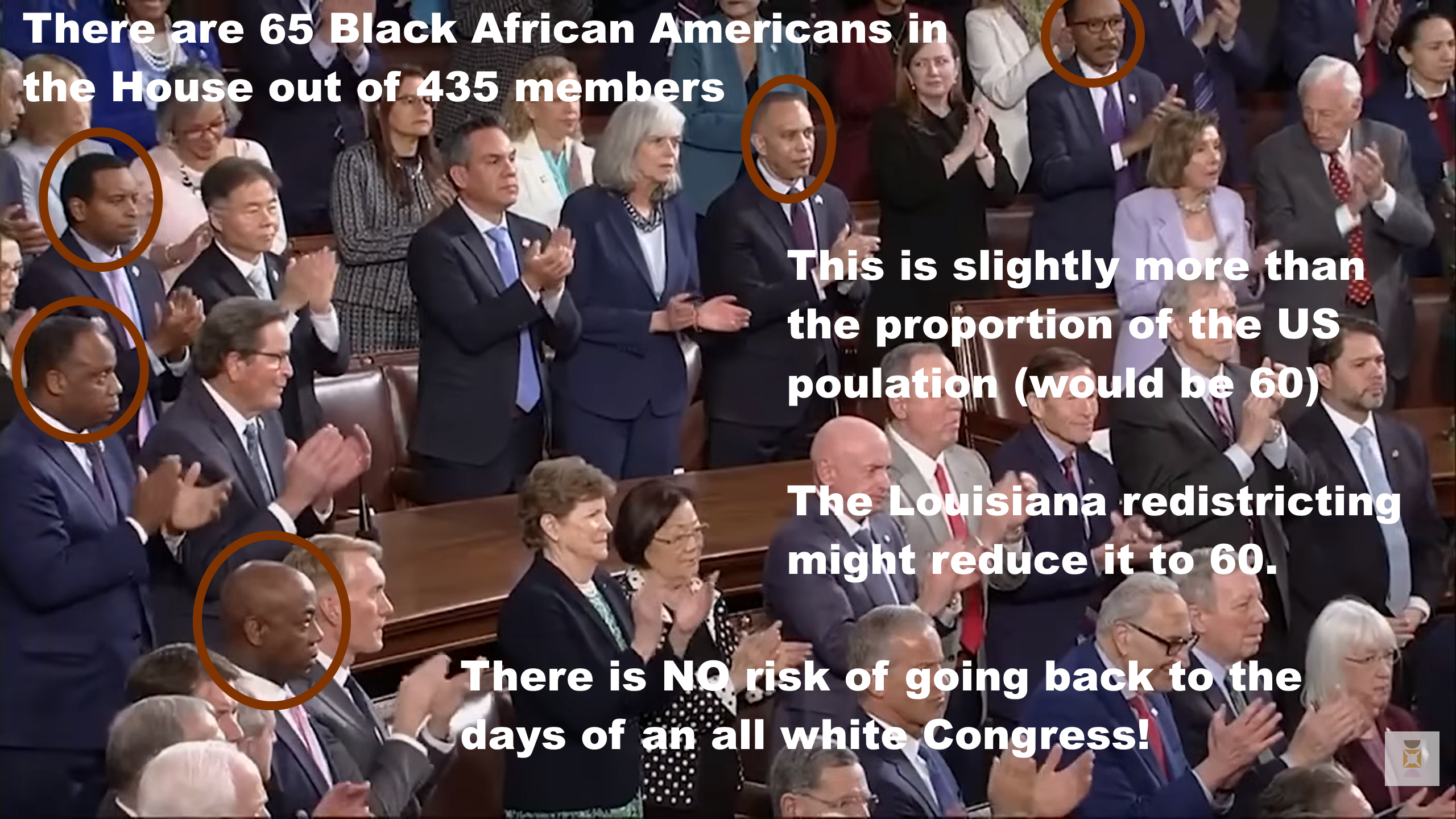
So if due to the Louisana case they lose one Black African American seat in the midterms it reduces the number to 64 still well above the 60 to be in proportion to the population of the USA. Even if they lose 2 Black African American seats by redistricting Louisiana to be 100% Republican it’s still 63 and well above the proportions of the population.
Note if the Dems do win by a landslide in the midterms this is reasonably likely to increase the black African American representation above 62 / 63 as Black African American candidates have a significantly higher tendency to be Democrats than White candidates which is likely why it’s a bit above average in the House.
Hakeem Jeffries is the first Black representative to lead his party in Congress. He may become the speaker of the House after the 2026 elections. By RacetotheWH it’s currently running at a 4 in 5 chance that he is the new speaker.
Kamala Harris as a black women is top candidate to run for president for the Democrats in 2028. Immediately after her defeat she lost popularity. But now that many of the things she talked about happened, she is regaining support as Trump loses support. She hasn’t announced that she will run for president but is currently the favorite for the Dems and may be our next president.
She was of course the first black Vice President. It’s possible she becomes the first Black president.
Background see my:
BLOG: Minimal effect from SCOTUS Louisiana ruling: 1-2 seats for House in 2026
— at most 10 in 2028 likely counteracted by Dems
— House margins typically larger
— election of president or senate unchanged
You can read it here:
https://robertinventor.substack.com/p/effect-of-supreme-court-ruling-in
When I get a bit of time I’ll likely do a new substack focusing on how there is no risk of having low levels fo Black African American representation in the House. Indeed seems likely to remain above the proportions in the country as a whole. They tend to be in the Democrat party, not all of them. But that’s no surprise because Black African Americans for the most part vote Democrat (though some vote Republican).
It doesn’t mean that the Republicans are blocking advancement of Black African American candidates, it just means they naturally have fewer of them.